What to Expect When Fostering a Great Dane: The Good, the Hard, and Everything in Between
So, you’re thinking about fostering a Great Dane? Or maybe you’ve already said yes, and now you’re wondering what exactly you’ve gotten yourself into.
Welcome to the club! It’s full of oversized dogs, questionable personal boundaries, a shocking amount of drool, and occasionally some tears.
Fostering is one of the most rewarding things you can do for a rescue dog. But we’re not going to sugarcoat it: fostering isn’t always easy.
Sometimes you bring home a Great Dane who immediately claims your couch like he’s lived there forever. Other times, you bring home a dog who’s terrified of the ceiling fan, doesn’t understand stairs, and has absolutely no intention of going potty outside.
And sometimes, you get a little bit of everything.
Every dog comes with a different history, personality, and set of needs. Even experienced fosters encounter challenges. That’s normal, and it’s why we’re here to help.
Here’s what fostering actually looks like, from the first few days to the bittersweet goodbye.
The First Few Days: Less Is More
You’ve picked up your foster, survived the car ride, and made it through the front door.
Now what?
Honestly? Not much.
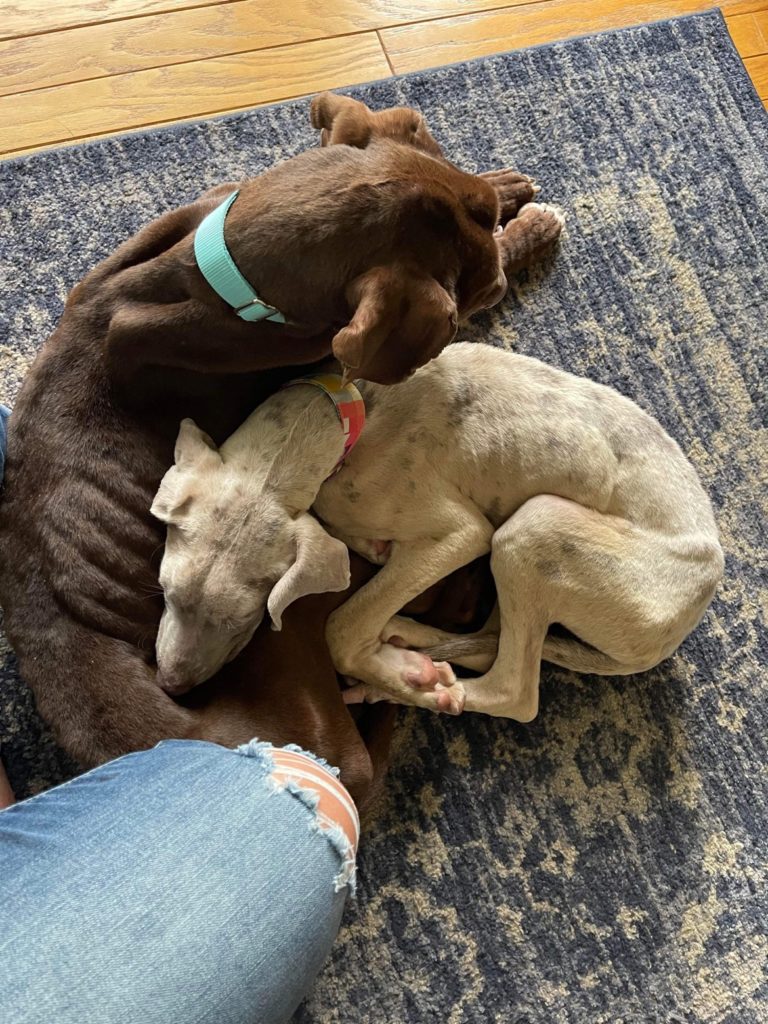
We know you’re excited to introduce your new foster to all the wonderful things about their temporary home, but those first few days should be pretty boring.
Think about what they’ve just experienced. Maybe they’ve lost the only family they’ve ever known. Maybe they’ve spent time in a shelter, been transported by strangers, or had their entire routine turned upside down.
Now they’re standing in your living room surrounded by unfamiliar smells, sounds, people, and expectations.
That’s a lot for any dog.
Some dogs shut down. Others become restless, clingy, or overly excited. Your foster might refuse meals, sleep excessively, have potty accidents, or follow you absolutely everywhere.
The best thing you can provide is a quiet environment, a predictable routine, and time to decompress.
You don’t need to entertain them every waking minute, introduce them to the neighborhood, or invite everyone over to meet the new Great Dane.
There will be plenty of time for that later.
And remember, our foster families receive guidance specific to the dogs in their care. What works for one dog might not work for another.
Getting to Know the Real Dog
Here’s where fostering gets interesting.
As your foster settles in, their personality starts to emerge.
Maybe the quiet, reserved dog you brought home is now doing zoomies across your living room. Maybe the dog who wouldn’t leave their bed has decided they absolutely must supervise every bathroom trip.
Or maybe you’re beginning to notice behaviors that weren’t obvious when they first arrived.
You might discover separation anxiety, resource guarding, reactivity toward other dogs, or fears you didn’t know existed.
This doesn’t mean your foster is a bad dog. It means you’re learning who they are.
Not every behavior improves simply because a dog has time to settle in. Some require management, training, or professional support.
And that’s okay.
Our job isn’t to turn every foster into a perfectly trained Great Dane. It’s to understand their needs, help them succeed, and find the type of home where they’ll thrive.
The more we learn about a dog in foster care, the better equipped we are to make a successful adoption match.

Introducing Your Foster to Your Household
If you already have dogs, you might be excited for everyone to become best friends.
But slow and safe will always win over rushed and hopeful.
A dog described as “great with other dogs” may still struggle in an unfamiliar environment. Stress, excitement, fear, and valuable resources can all affect how dogs interact.
Introductions should be gradual and follow your rescue coordinator’s guidance. Some dogs need more time and space before they’re ready to interact.
I learned firsthand with my own Great Dane, Cash, that introductions aren’t always straightforward. Cash struggled with leash reactivity, which meant bringing another dog into our home required extra planning and patience.
It taught me something important: what works for one dog won’t necessarily work for another.
The goal isn’t to force friendships. It’s to help everyone feel safe.
And if your foster and resident dog simply coexist peacefully without becoming best friends? That’s perfectly fine, too.
When Fostering Gets Hard
Let’s talk about something that doesn’t always make it into the cute foster photos.
Sometimes fostering is hard. Really hard.
You might have a dog who can’t tolerate being alone, one who guards their food, or one who reacts intensely to another dog walking past the window.
You might find yourself rearranging your entire routine to accommodate a dog you’ve only known for a week.
And you might wonder whether you’re doing something wrong.
The truth is, rescue dogs can come with complicated histories, and even experienced fosters don’t always have the answers.
What matters most is communicating with your rescue team.
We need to know about the challenges just as much as the successes. Not because we’re judging your foster home, but because honest information helps us support you and find the right home for your foster.
Sometimes progress looks like learning a new skill. Sometimes it’s discovering that a dog needs a quieter environment, more structure, or a different type of household.
Those discoveries matter.
And sometimes, despite everyone’s best efforts, a foster placement isn’t the right fit. If that happens, we want to know so we can work toward a better solution.
You’re More Than Just a Temporary Home
Fostering isn’t just about providing a safe place to sleep.
You’re helping us understand who this dog really is.
Do they love car rides? Are they comfortable being left alone? Do they enjoy other dogs? Are they a professional counter surfer? Do they believe personal space is a ridiculous human invention?
We want to know all of it.
As a foster, you’ll provide daily care, exercise, enrichment, and a safe home environment. You’ll also help coordinate veterinary care, share updates and photos, and tell us about your foster’s personality and behavior.
The rescue provides veterinary care, necessary medications, and screening of potential adopters. We work with our foster families to provide guidance and support along the way.
Those goofy quirks, little victories, and even the not-so-cute behaviors help us find the best possible adoptive home.
You don’t have to be a professional dog trainer or have decades of experience to make a difference. You just need patience, a willingness to learn, and a commitment to the dog in your care.
The Hardest Part: Saying Goodbye
Eventually, if all goes according to plan, your foster finds their forever family.
And this is where things get emotional.
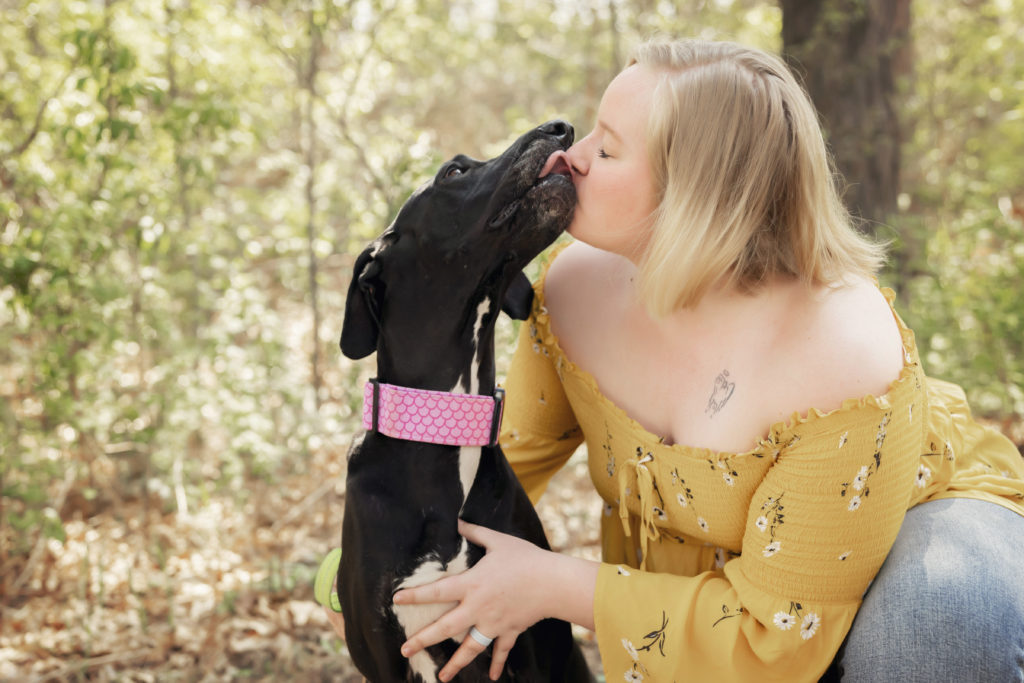
You’ve spent weeks or months getting to know this dog. You’ve celebrated the little victories, worked through the hard days, and learned exactly where they like to be scratched.
Maybe you’ve watched a terrified dog learn to trust again. Maybe you’ve helped a dog recover from surgery or discover what it feels like to be part of a family.
And now you’re supposed to hand them over to someone else?
Yep.
And we’re not going to pretend it doesn’t hurt.
I cry when my fosters leave. Heck, sometimes I cry when other people’s fosters get adopted.
But there’s something pretty incredible about watching a dog you helped become part of the family they were meant to find.
You didn’t just give that dog a place to stay. You helped give them a future.
And while saying goodbye might leave a Great Dane-sized hole in your heart (and a suspiciously empty spot on your couch), it also means you’ve made room to help another dog who needs you.
Of course, sometimes a foster becomes a permanent family member. We lovingly call those foster fails, and yes, we’re familiar with the phenomenon.
So, Is Fostering a Great Dane Worth It?
Absolutely.
Not because every day is easy, but because of the moments that make it all worthwhile.
The first tail wag from a dog who arrived terrified. The goofy personality that finally starts shining through. The adopter who sends you a photo of your former foster curled up on their couch, completely at home.
And the knowledge that because you said yes, a dog had somewhere safe to land.
Fostering saves lives. Sometimes it’s messy, sometimes it’s exhausting, and sometimes it breaks your heart a little. But it matters.
Great Dane Rescue of Minnesota & Wisconsin is a foster-based rescue, and the number of dogs we can help depends on the foster homes available.
We work to match dogs with foster families based on their experience, household, lifestyle, and the individual dog’s needs.
You don’t have to be ready for every dog. You just have to be the right person for one.


Leave a Reply