Let’s Talk Puppies! Socialization, Genetics, and Why We’re So Picky About Where Ours Go
We’ve had a whole lot of puppy chaos happening behind the scenes lately, and if you’ve been following along, you’ve probably caught a few glimpses of the adorable little troublemakers.
We’ve taken in multiple litters of Great Dane puppies, which means our fosters have been busy with feedings, vet appointments, vaccinations, socialization, and cleaning up approximately 47,000 piles of poop. Give or take.
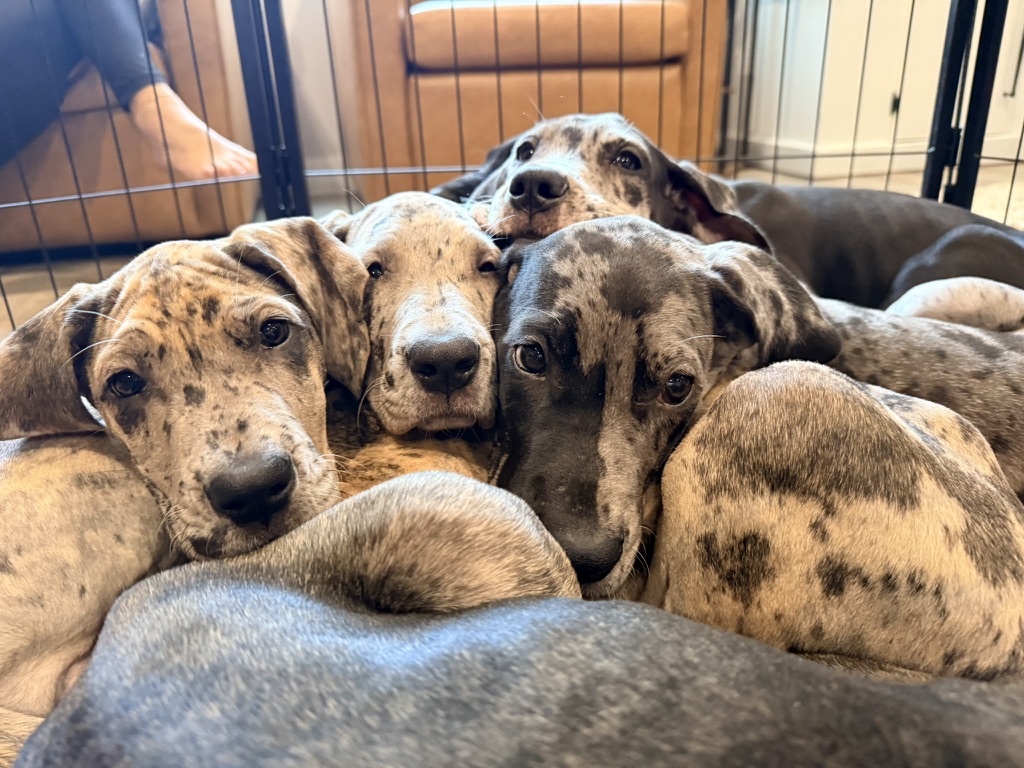
Puppies are a TON of work. They’re also an incredible opportunity to give dogs a great start in life, especially when their beginnings have been a little less than ideal.
And since we’ve gotten questions about the puppies, where they came from, and why nobody ever saw them listed for adoption, let’s get into it.
Those First Few Weeks Are a Pretty Big Deal
One of our recent litters came into rescue at around nine weeks old, and these poor babies were terrified of absolutely everything.
We’re talking about puppies who were already well into one of the most important developmental stages of their lives and had some serious catching up to do.
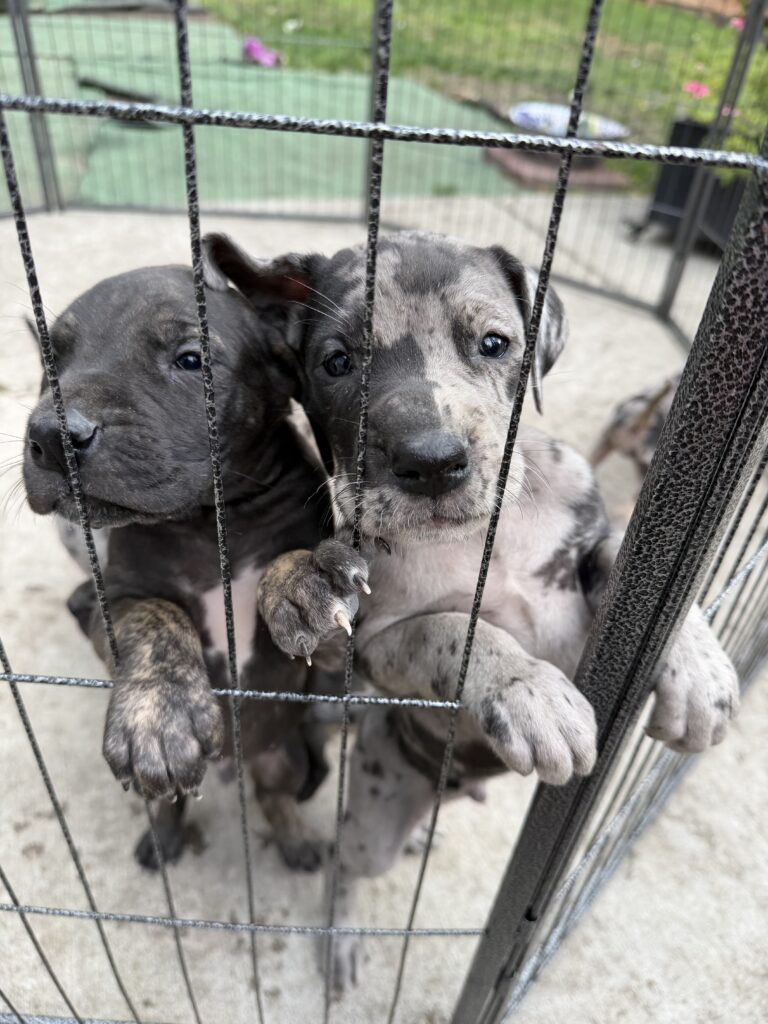
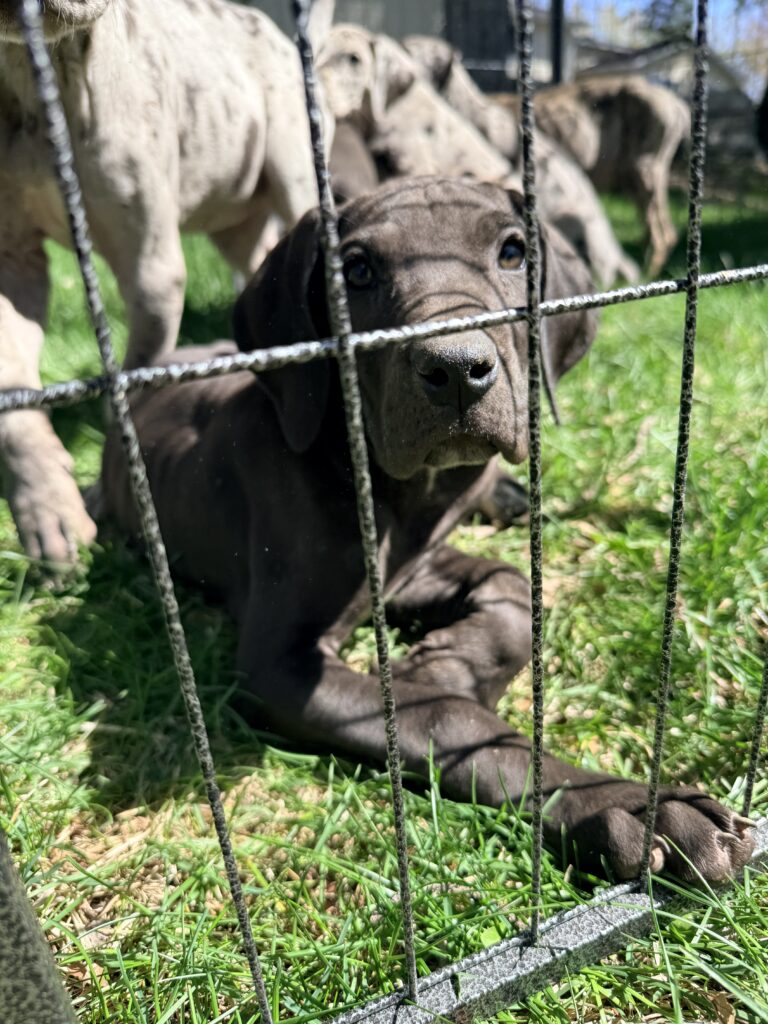
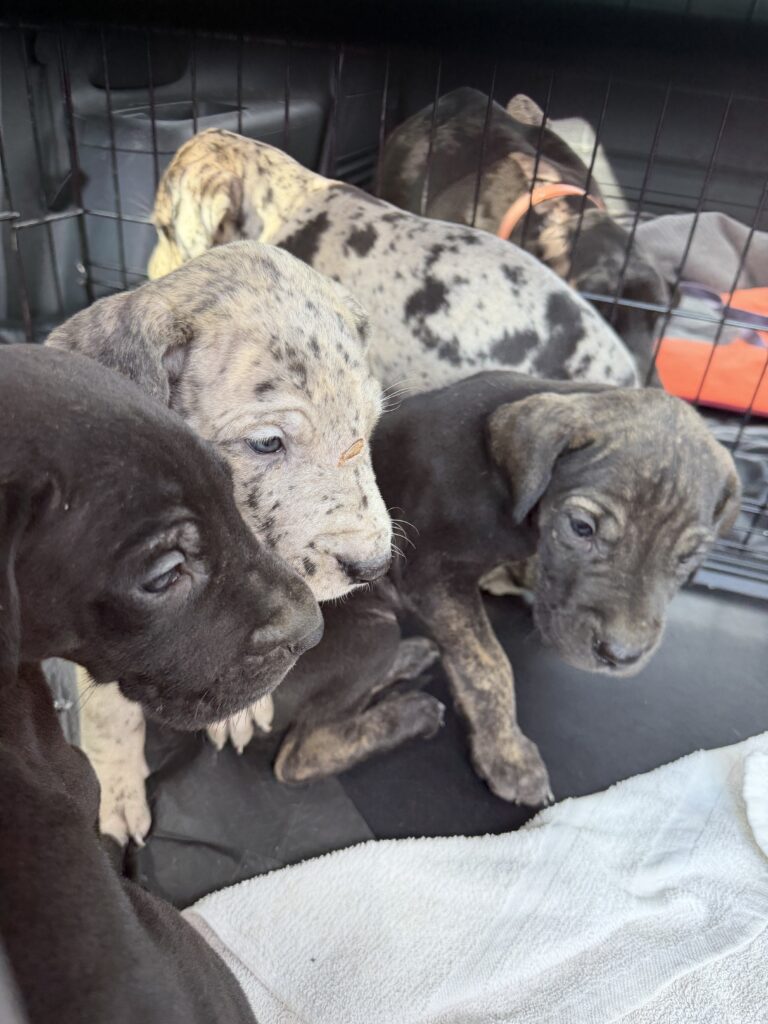
Puppies have what’s called a socialization period, which generally runs from about 3 to 12–14 weeks of age. During this time, their brains are especially receptive to new experiences, and the things they learn can have a lasting impact on how they handle the world as adults.
Think about all the things your dog encounters on a normal day. The vacuum cleaner. A stranger walking into your house. A car ride. Different flooring. Other dogs. Kids running around. The neighbor doing something questionable with a leaf blower.
For a puppy who hasn’t had much exposure to the world, even the most ordinary things can be scary.
Our fosters had their work cut out for them with this particular litter. These puppies needed extra time, patience, and a whole lot of carefully planned socialization to help them become more comfortable with everyday life.
There’s a balancing act here, too. Young puppies aren’t fully vaccinated, so we have to be mindful of disease exposure while still giving them opportunities to safely experience new things. And socialization doesn’t mean dragging a terrified puppy into every situation imaginable. That’s a pretty good way to make things worse.
We take it slow, keep experiences positive, and pay attention to what each puppy can handle.
And while early socialization is incredibly important, there’s another piece of the puzzle that doesn’t get nearly enough attention.
Let’s Talk Genetics. Because You Can’t Train Those Away.
There’s a pretty common belief that if you get a puppy young enough and “raise it right,” you’ll end up with a well-adjusted adult dog.
We wish it were that simple.
Genetics play a significant role in a dog’s temperament and behavioral tendencies. Fearfulness, confidence, sociability, sensitivity, and certain behavioral predispositions can all have heritable components.
And sometimes, those traits don’t become fully apparent until a dog reaches adolescence or social maturity.
You can do everything right and still end up with a dog who needs more support than you ever anticipated. That’s a reality of dog ownership that doesn’t get talked about nearly enough, especially when people are shopping for puppies.
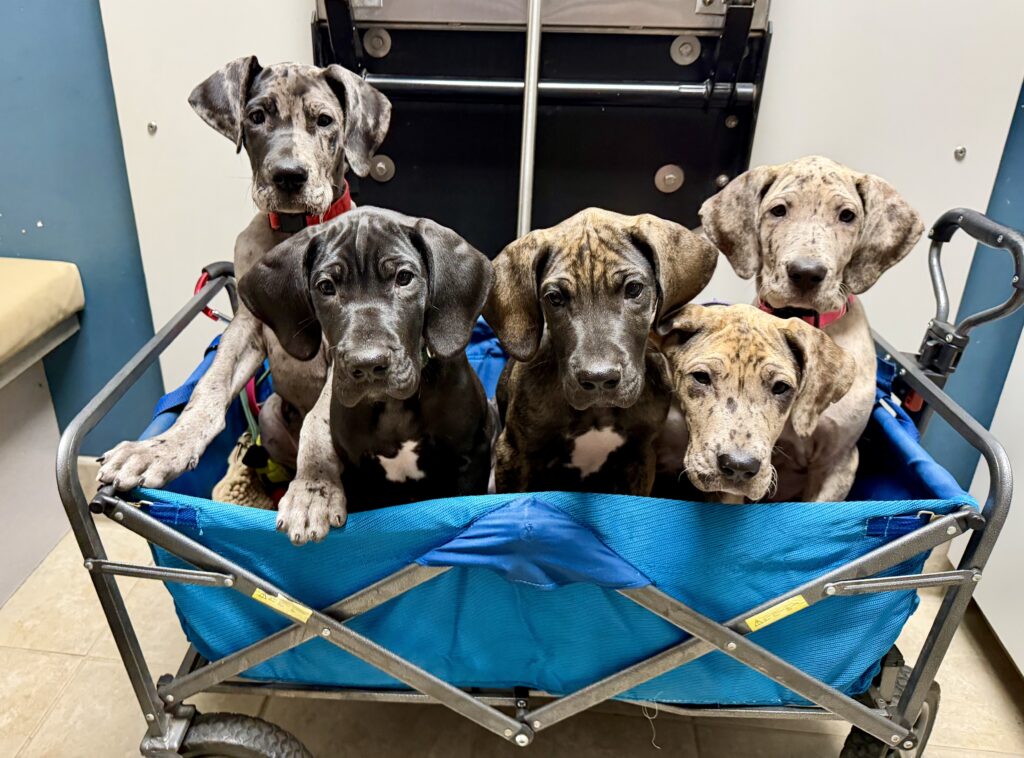
You can spend months doing puppy classes, socialization, training, enrichment, and all the things you’re supposed to do, only to find yourself living with a very different dog at two or three years old than the one you thought you were raising.
Those early experiences still matter tremendously, and behavior can continue to improve with appropriate support. But genetics can influence how a dog responds to those experiences and what challenges may develop along the way.
This is especially important in rescue because we frequently have very little information about a puppy’s parents.
With these recent litters, we were fortunate enough to have two of the mama dogs in rescue with us, and they were FABULOUS. Wonderful temperaments, lovely dogs, and we couldn’t have asked for better girls.
But that’s still only part of the picture.
We don’t necessarily know much about the fathers, the grandparents, or the generations of dogs behind them. We don’t know what behavioral tendencies may have been passed down, and even knowing both parents wouldn’t allow us to predict exactly how every puppy will turn out.
Great Danes have some pretty interesting breed characteristics, too. They’re often called gentle giants, but there’s a lot more to their temperament than being oversized couch potatoes. We dive into their history, natural instincts, and other breed characteristics in our About Great Danes article.
We think about all of this when placing puppies because we’ve seen what can happen when those adorable little babies reach maturity and their behavior becomes more complicated.
And with a Great Dane, complicated can become dangerous pretty quickly.
Why Temperament Should Matter More Than Color
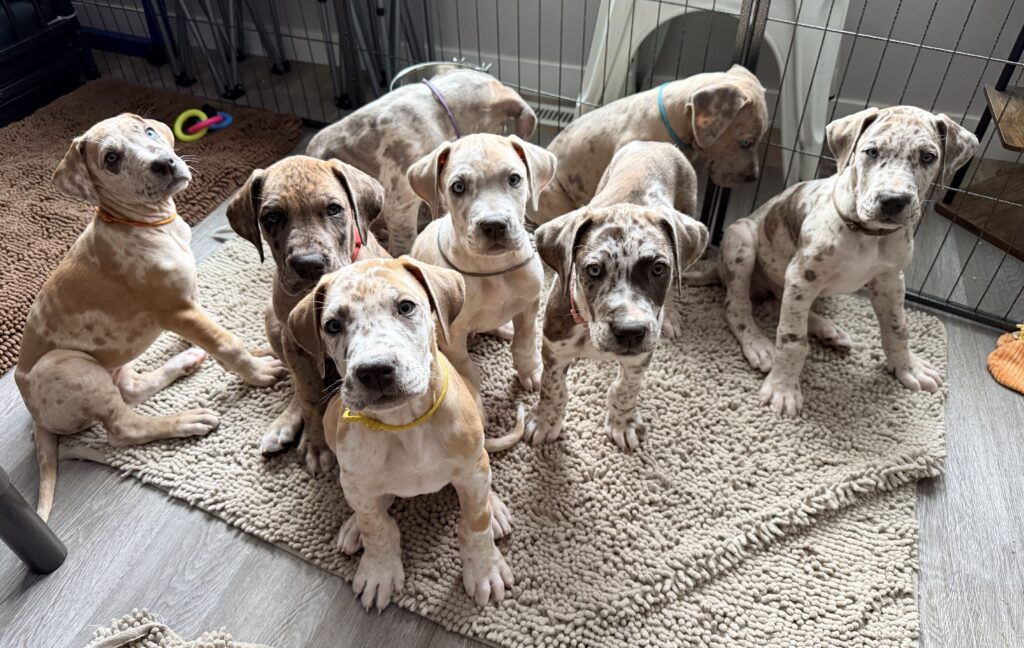
Here’s where we might ruffle a few feathers.
There’s a whole lot of emphasis placed on what puppies look like. People want a blue Dane, a harlequin, a merle, a certain marking, or whatever color happens to be catching everyone’s attention at the moment.
We get it. Great Danes are gorgeous dogs.
But we’ve seen far too many situations where puppies are bred and sold based on appearance, with little consideration given to temperament, health, or whether the buyer is actually prepared for the dog they’re bringing home.
And unfortunately, this isn’t limited to breeders.
Rescues can fall into the same trap when the priority becomes getting puppies adopted quickly without taking the time to evaluate individual personalities, discuss potential behavioral challenges, and carefully consider the homes they’re going into.
Puppies are generally easy to place. Everyone loves puppies.
But when that cute little puppy becomes a 150-pound adult dog who struggles with fear, reactivity, resource guarding, or other behavioral challenges, things can get a whole lot harder.
We’ve taken in plenty of Danes whose families loved them dearly but simply couldn’t safely manage the behaviors that developed as they grew.
We want prospective adopters to understand that possibility before bringing a puppy home.
Even the most thoughtfully raised puppy can develop behavioral challenges. Responsible breeding, early socialization, training, and appropriate placement can improve the odds of a successful outcome, but nobody can promise you a perfectly behaved adult dog.
Anyone who does should probably raise a few red flags.
So, No, You Don’t Get to Call Dibs on the Cute One.
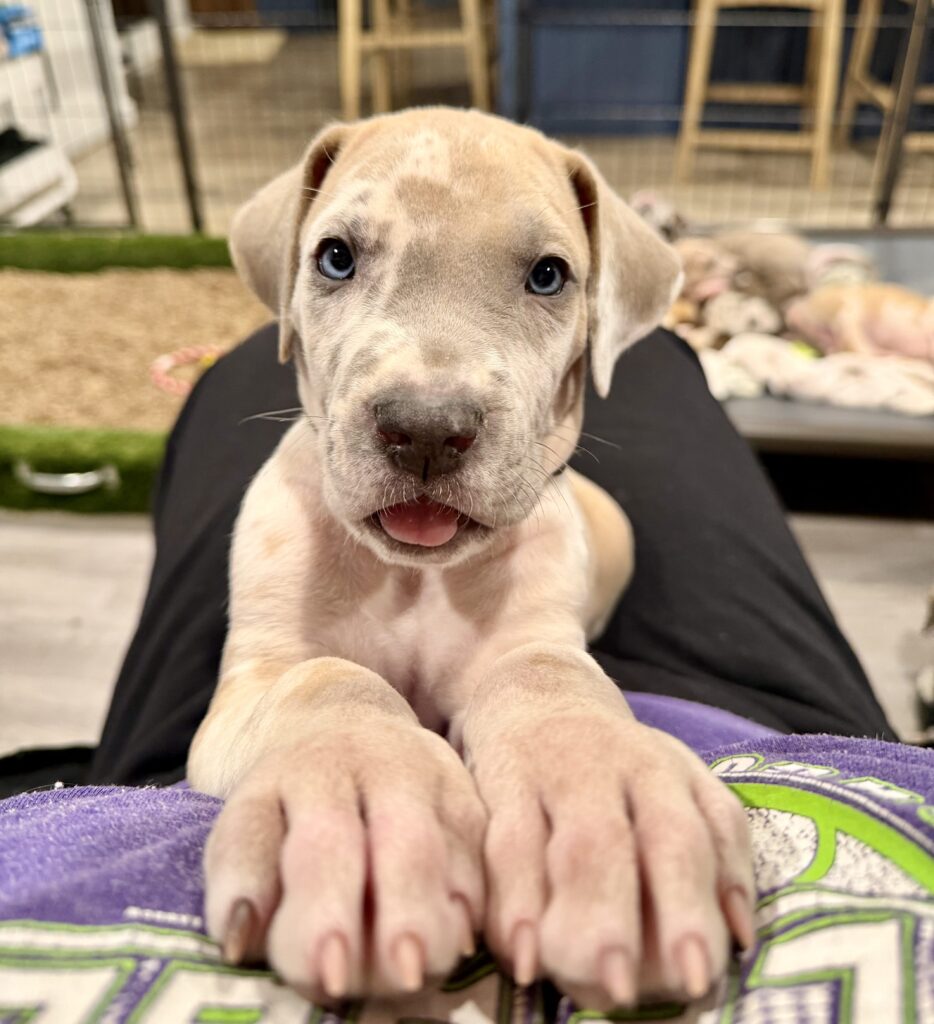
Now that we’ve covered all of that, our puppy adoption process might make a little more sense.
We don’t let adopters simply choose whichever puppy they like best based on a photo.
Our fosters spend an enormous amount of time with these dogs, watching their personalities develop and learning how they respond to different situations. Some puppies are outgoing and confident, others are more cautious, and some need homes with people who have the experience and patience to help them continue building confidence.
We consider the adopter’s lifestyle, household, other animals, experience with giant breeds, and willingness to work through potential challenges.
We also have some pretty honest conversations about expectations.
If someone is looking for a guaranteed dog-park-loving, stranger-friendly, easygoing adult Dane, we need them to understand that no puppy comes with that guarantee.
And if we have a puppy who’s already showing signs of needing additional behavioral support, we’re going to be particularly thoughtful about where that puppy goes.
Yes, we’re picky.
We’ve spent years working with Danes who have significant behavioral challenges, including dogs who can no longer safely live in traditional homes. That experience has shaped how we approach adoptions, especially when we’re placing young dogs whose adult temperaments are still developing.
We want families who are prepared to love and care for the dog they have, even if that dog grows up to be a little different than they imagined.
If you’re considering adding one of these giant goofballs to your family, we’d also encourage you to read our Is a Great Dane Right for You? article. There’s a lot to consider beyond how adorable they look curled up on your couch.
Wait. There Were Puppies Available?!
Ahhh, yes. The question we’ve been getting.
Where did all the puppies go, and why weren’t they posted for adoption?
Well, here’s your little insider tip.
Already approved adopters have a HUGE advantage when puppies come into rescue.
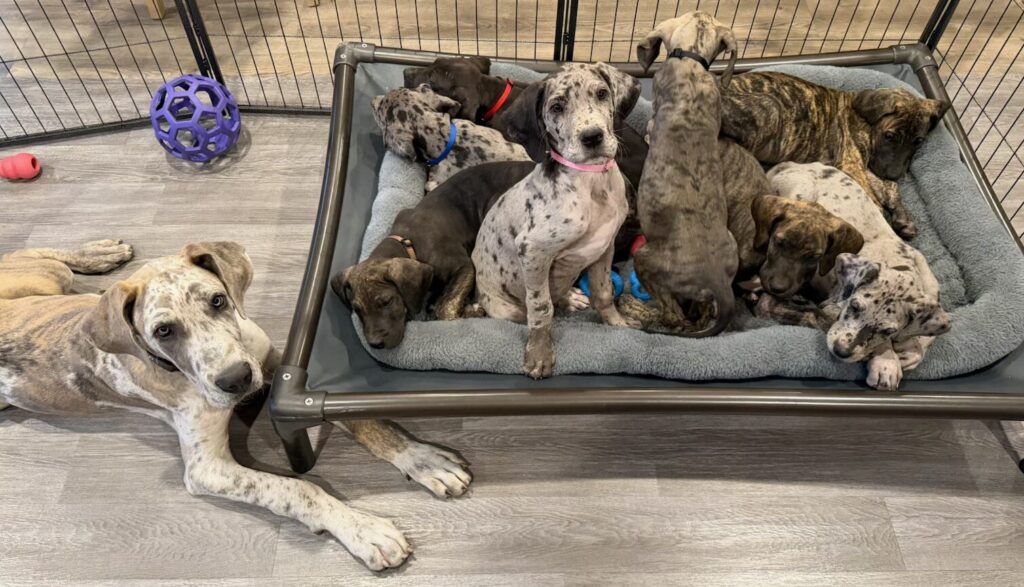
We have an incredible community of previous adopters, fosters, volunteers, and families who have already completed our adoption process and are waiting for the right dog.
When we have puppies ready for adoption, we look at those families first.
They’ve already completed their applications, references, home visits, and conversations with our team. We know what kind of homes they can offer, what they’re looking for, and whether we might have a puppy who’s a good fit.
And sometimes, we have enough qualified, approved families waiting that every puppy has a home lined up before we ever need to post them publicly.
Which is exactly what happened with these litters!
We’re not going to collect hundreds of additional applications just for the sake of posting adorable puppies online when we already have wonderful homes waiting.
Of course, being approved doesn’t guarantee a particular puppy. We’re still making thoughtful matches based on the individual dog and the family.
But if you’ve been thinking about adopting a Great Dane, we cannot stress this enough: Don’t wait until you see a dog you want to start the application process.
This applies to adult Danes, too! Some dogs find their homes through our existing network of approved adopters before they ever make it onto our website.
You can learn more about how it all works on our Adoption Process page.
The People Behind the Puppies
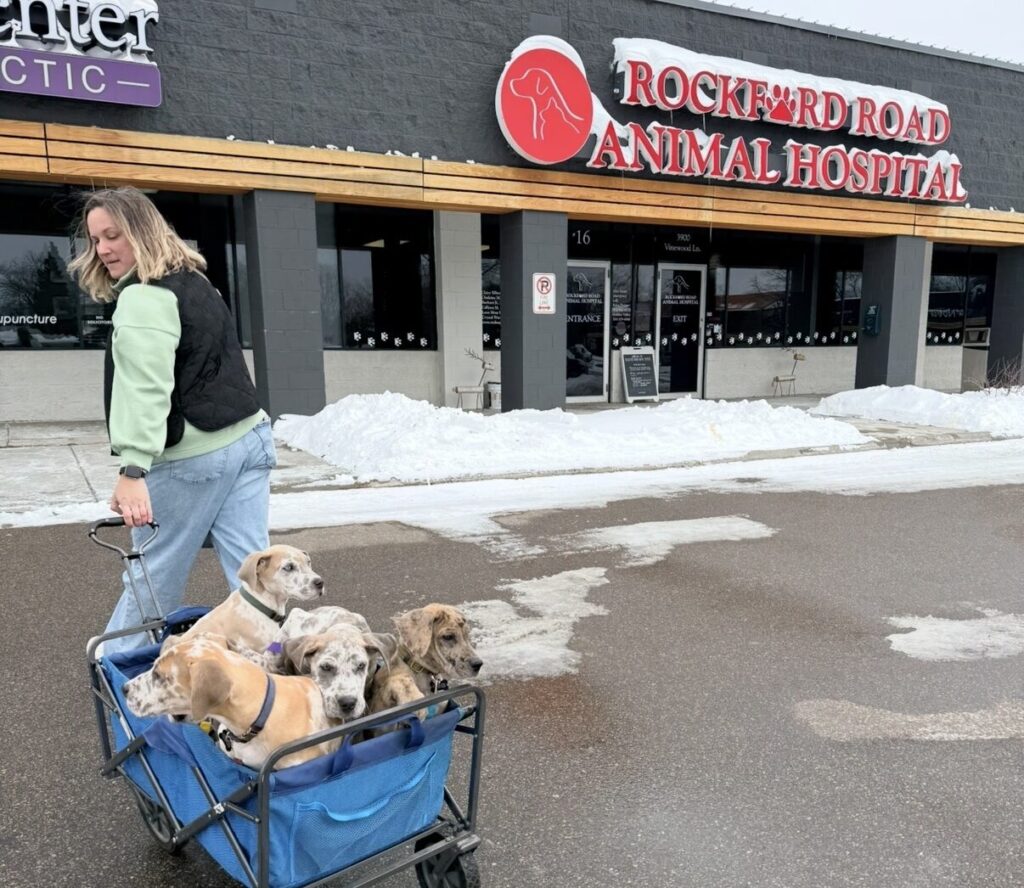
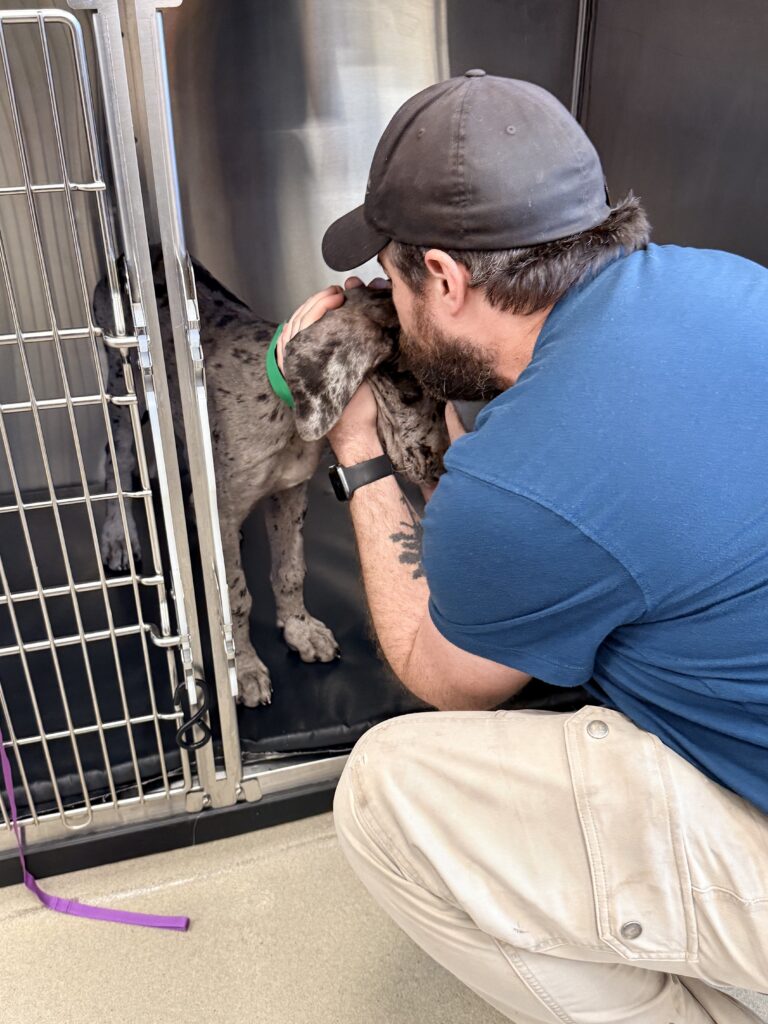
We also need to give a HUGE shoutout to Director of Rescue Operations, Stephanie who has found a new passion for raising these litters until they are ready for foster homes, and our fosters, because raising entire litters of puppies is no small undertaking.
Between the feeding, cleaning, vet appointments, training, and socialization, these little guys have kept everyone BUSY. And for the puppies who came to us needing extra help building confidence, that meant even more time and patience.
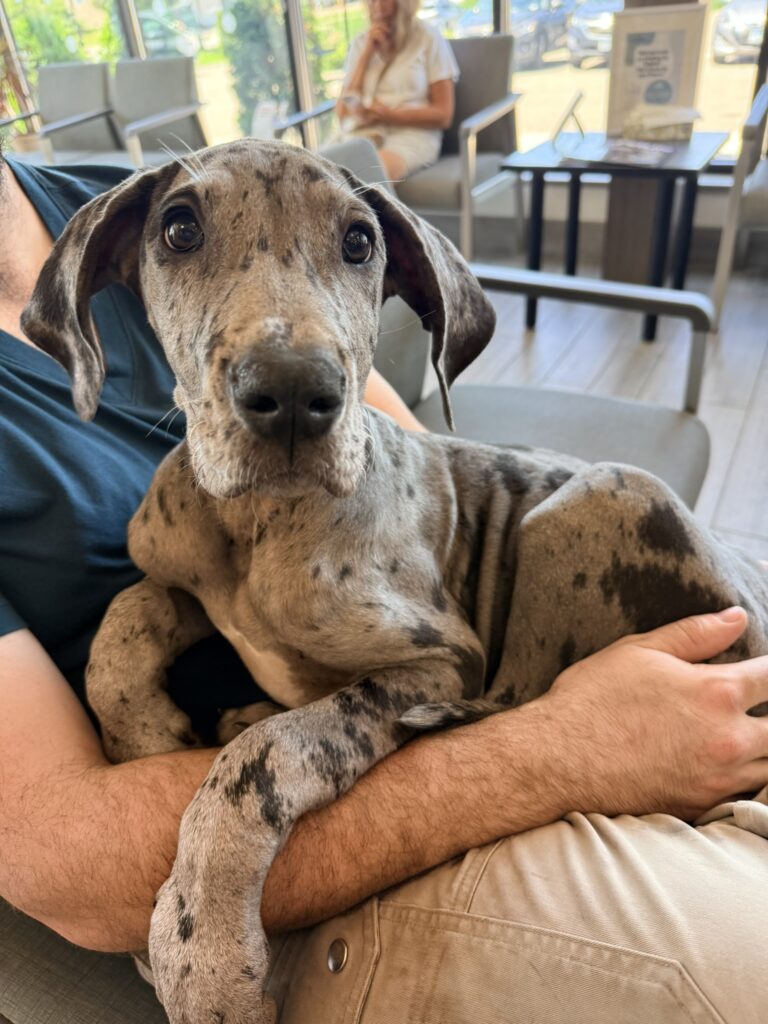
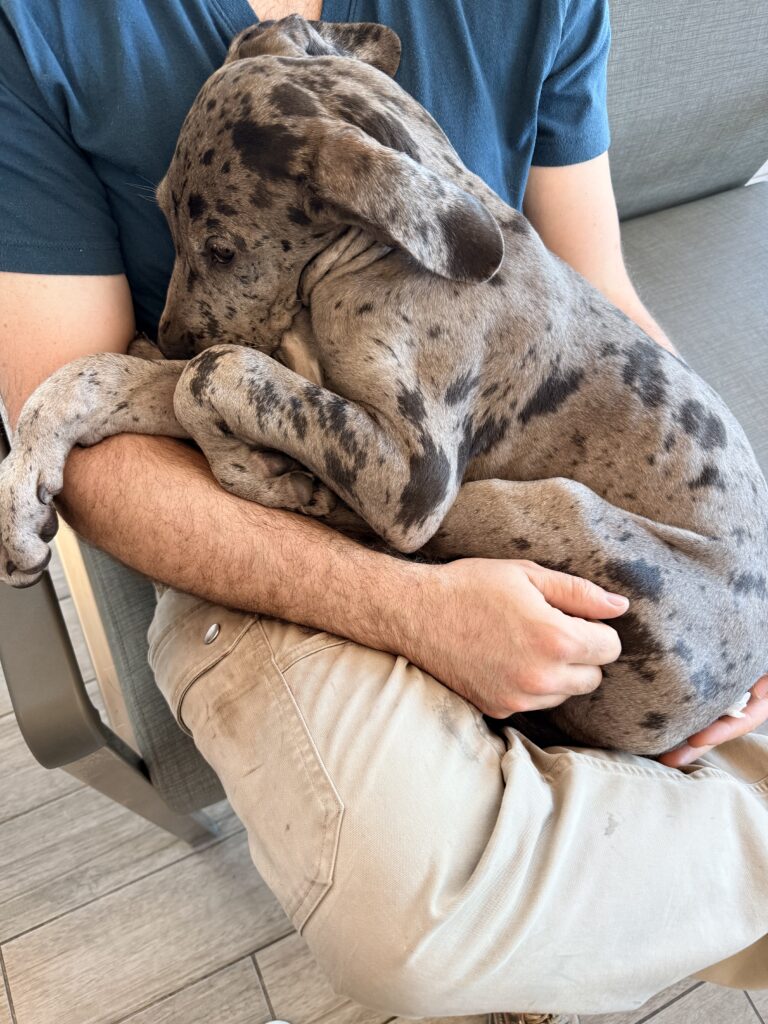
We’re incredibly grateful for the families who trust our adoption process, too. We know it can be frustrating when you fall in love with a particular puppy and we suggest a different match, or when puppies are adopted before you even knew they were available.
But we’ve seen enough of what happens when the wrong dog ends up in the wrong home to know how important these decisions are.
We can’t predict everything about how a puppy will develop. We’re going to keep learning about each dog, sharing what we know with adopters, and doing our best to set everyone up for success.
And hopefully, years from now, we’ll be getting pictures of these puppies living their best giant-dog lives with the families who were just right for them.
Thank you for supporting our fosters, our puppies, and all the work that goes into #savingdanes!
Leave a Reply